

Gum Health - Specialized Care
For Your Gums
The Importance of Gum Health & Oral Hygiene
Maintaining healthy gums is at the core of good oral health - but that is only part of it. Poor gum health has been found to have serious ramifications on overall physical wellbeing, with researchers uncovering links to even more serious conditions. Our aim is to help you gain more insight into its causes, its impacts and how best you can prevent future episodes.
What is Gum Disease?
Gum disease (formerly referred to as periodontitis) is a chronic inflammatory response caused by the accumulation of plaque and calculus along the gum line, usually as a result of bacteria mixing with sugar or food particles and producing plaque deposits in your mouth. Regular brushing and flossing to avoid plaque formation is therefore essential.
Are There Different Types of Gum Disease?
Though there isn't one particular type of gum disease, there are different stages - gingivitis and periodontitis.
Gingivitis is the early stage of gum disease and affects only the surface layers of the gum, rather than teeth, bone or deeper parts of the gums.
Symptoms:
- Redness and inflamed gums
- Bleeding gums (particularly during brushing or eating
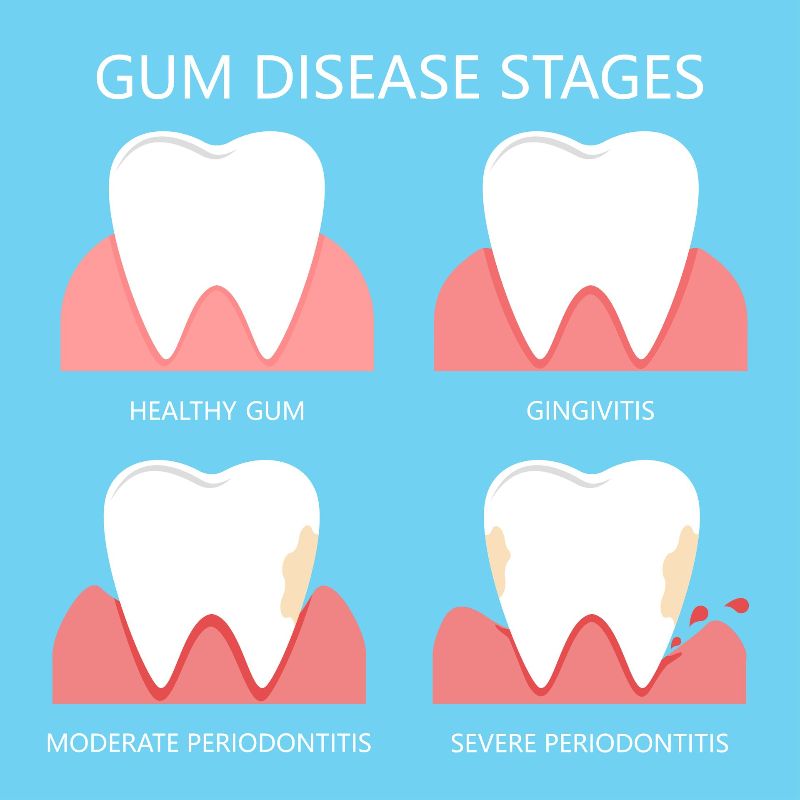
Attempts at self-care alone won't do when dealing with bleeding or puffy gums; brushing with a soft toothbrush will remove plaque and bacteria causing issues in the first place. However, if they continue to worsen over time it's important to see a dentist or oral specialist for professional dental advice and treatment.
Periodontitis, an advanced gum disease, results from gingivitis left untreated for too long. At this stage, it becomes far more taxing on the body as structures holding each tooth firmly into its socket become so soft and weak that teeth may either fall out on their own or require removal altogether.
The Consequences of Poor Gum Health
Good oral hygiene is essential to overall health and wellbeing, according to research. Studies have discovered a direct relationship between gum disease and heart disease, high blood pressure, diabetes, strokes and more - due to bacteria from periodontal pockets entering the bloodstream and creating inflammation elsewhere in the body.
Have a Dental Check-Up at Lake Arbor Dental in Mitchellville, MD
If you're experiencing persistently painful, inflamed or bleeding gums, don't hesitate to reach out - Lake Arbor Dental has your solutions!
If you're curious to learn more or would simply like an appointment at Lake Arbor Dental, reach out by calling (301) 808-3909 today and set one up!
Frequently Asked Questions
What Is Gum Disease?
Gum disease (periodontitis) is a chronic inflammatory response caused by plaque and calculus along the gum line. There are two stages:
- Gingivitis: Early stage affecting the surface of the gums; symptoms include redness, inflammation, and bleeding during brushing or eating.
- Periodontitis: Advanced stage resulting from untreated gingivitis. The tissues that hold teeth in place weaken, and teeth may loosen or fall out.
Why Is Gum Health Important?
Research cited on the page links poor gum health to serious conditions such as heart disease, high blood pressure, diabetes, and strokes. Bacteria from periodontal pockets can enter the bloodstream and cause inflammation elsewhere in the body. Maintaining healthy gums is therefore vital for overall health.
What Are the Signs of Gum Disease?
Common signs include red, inflamed or bleeding gums, persistent bad breath, receding gums and loose teeth.
How Can I Prevent Gum Disease?
Regular brushing and flossing are essential. If bleeding or swelling persists despite good home care, see a dentist for professional advice. Routine dental check‑ups at Lake Arbor Dental help identify problems early.